 Expose AI
Real or AI?
Know in seconds.
That profile picture, marketplace listing or viral photo — was it made by a machine? Pick an image or share it from any app, and Expose AI hands you a verdict with a confidence score in a second or two. Analyzed on your phone. Never uploaded.


Likely real
No clear AI signals detected. The marker lands below the shaded zone.
Uncertain
Not enough signal to call it — the app says so instead of guessing.
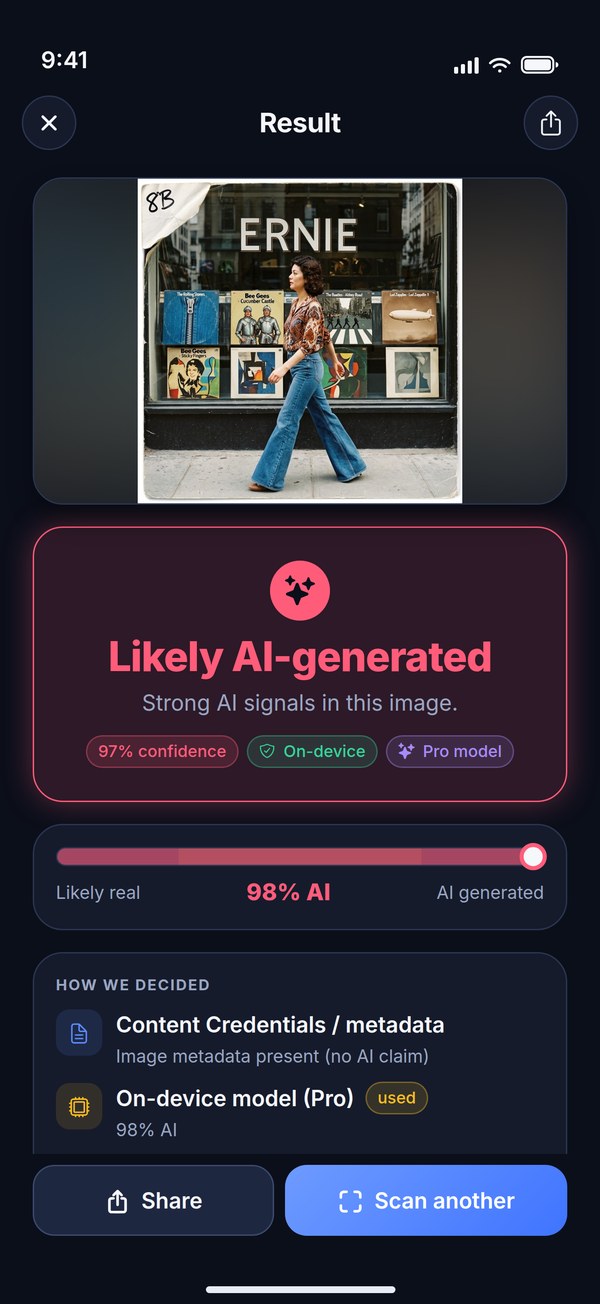
Likely AI-generated
Strong AI signals in this image — from the model, or from the metadata.
Two passes. One verdict. Zero uploads.
Both passes run side by side on your phone. A credible AI claim in the metadata decides on its own; everything else — screenshots, stripped files, re-saves — goes to the model. Either way, the result screen shows its work.
Pick or share
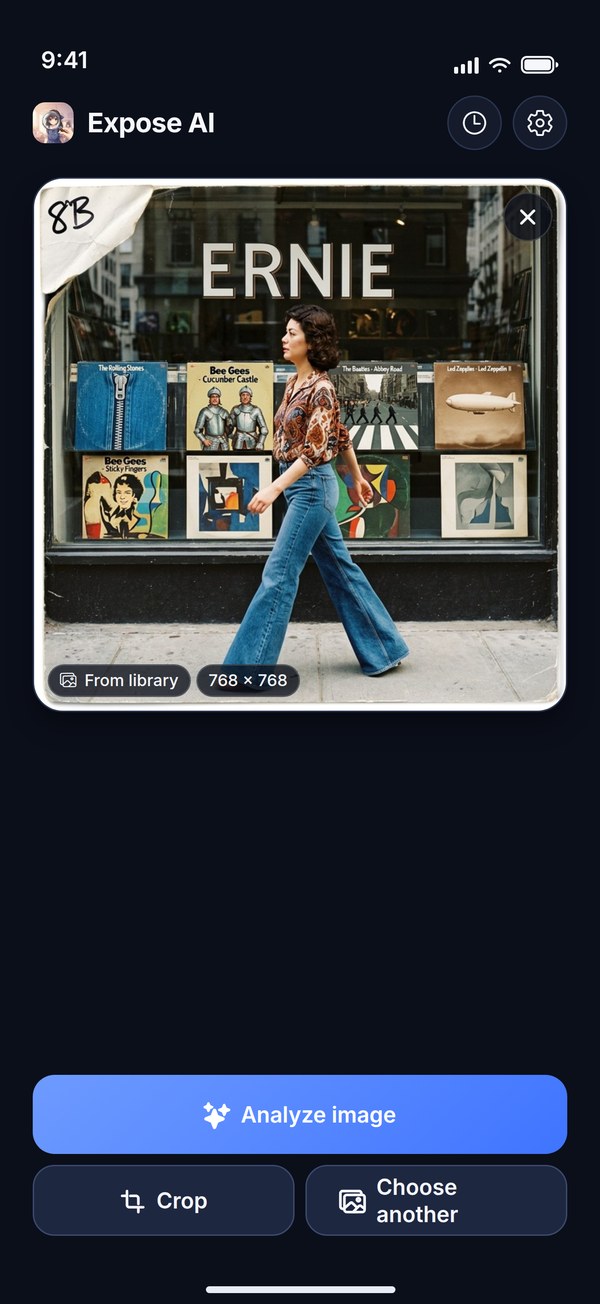
Choose an image from your library, or tap Share → Expose AI in any app: a browser, Photos, a screenshot.
Metadata pass
A fast read of embedded Content Credentials (C2PA), XMP and generator tags. An image that declares Firefly, FLUX, Midjourney or Stable Diffusion is flagged on the spot.
On-device model
A neural network trained on the visual fingerprints of AI image generators — bundled in the app, done in a second or two. Pro swaps in a larger model with roughly half as many Uncertain verdicts.
Verdict, with receipts
Likely real, Uncertain or Likely AI-generated, the confidence meter, and a "How we decided" card naming which pass made the call.
- Adobe Firefly
- FLUX
- Midjourney
- Stable Diffusion
- DALL·E
- Google Imagen
- Gemini
- Ideogram
- Leonardo.Ai
- NovelAI
- Signed C2PA credentials
Your photos never leave your phone.
The model ships inside the app and runs in your phone's memory. There is no server to upload to — so there is nothing for us to see, store or leak. Airplane mode works fine.
No upload, ever
Analysis happens on the device. Your images are never sent to any server, and no copy exists outside your phone.
One image, not your library
The system picker hands the app only the photo you tap — no library permission, no prompt, no account.
Works offline
Scan with no signal at all. The only things that ever use the network are ads and the Pro purchase.
See it in your feed? Share it here.
Expose AI sits in the share sheet of every app. Long-press an image in your browser or a social app, share it across, and it's already sitting on the home screen waiting for Analyze.
- Works on photos, saved images and screenshots.
- Checking a screenshot? Crop drags the app UI away and analyzes just the picture.
- Spots a screenshot on its own and nudges you to crop before it judges.
- Collages and galleries too — crop to the one image in question.
Single images only for now — video analysis isn't supported yet.
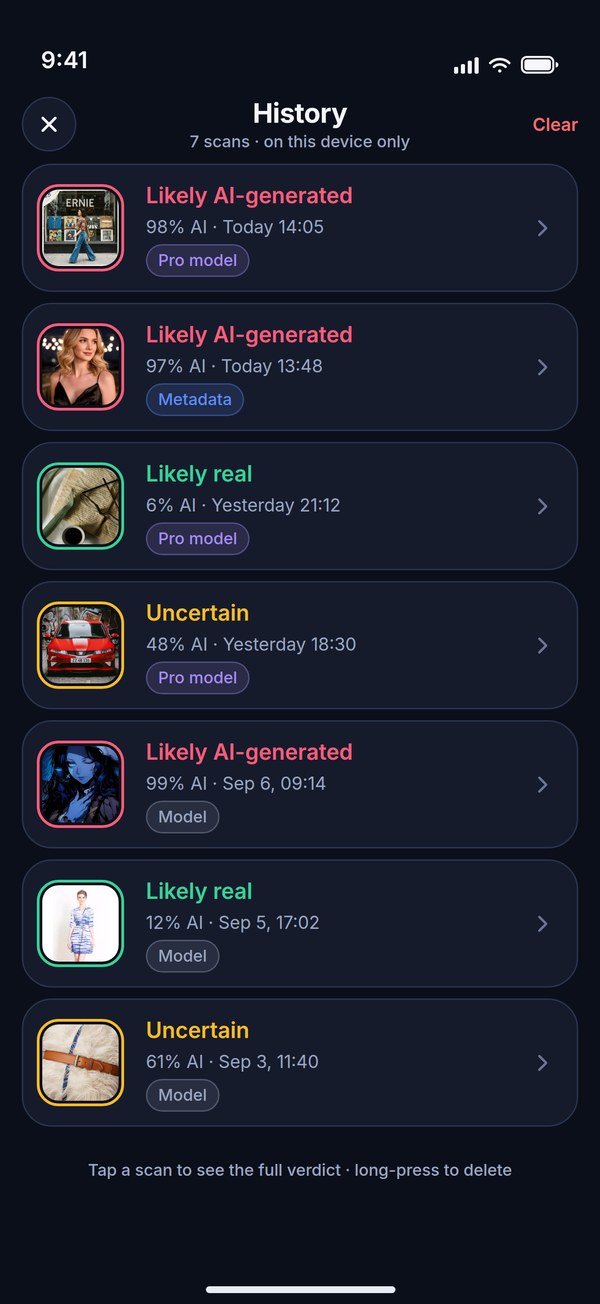
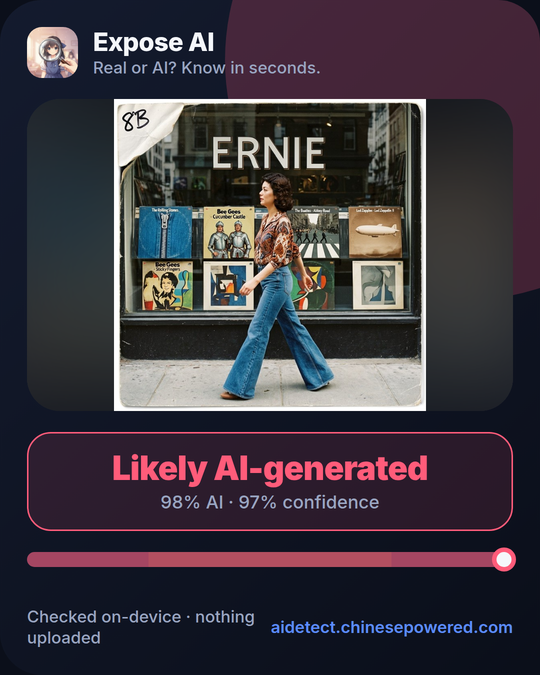
Look it up later. Share it now.
Every verdict lands in a private history on your phone — the thumbnail, the score, which pass decided — so you can find that suspicious listing again next week. And when a picture needs exposing, one tap turns the verdict into a card you can send anywhere.
- History stays on your device. Never uploaded, never synced. Pause it or clear it in Settings.
- A shareable verdict card with the image, the call and the confidence meter — no ads, no clutter.
- Tap any past scan to reopen the full breakdown.
- Camera and editor metadata now show up as evidence in “How we decided” — never as proof.
Small app. Straight answers.
A handful of screens, start to finish. No feed, no sign-in wall.
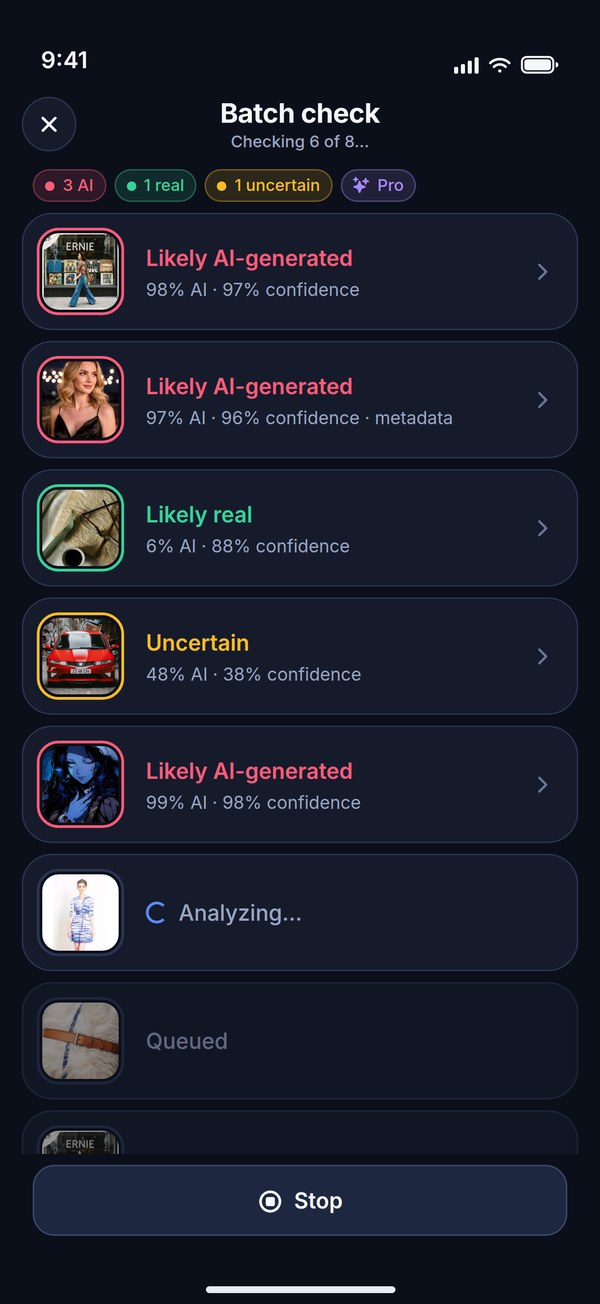
Batch check (Pro)
Pick a whole listing or profile — up to 12 images — and get a verdict for each.
Pick or share
One image, one big Analyze button. Crop if it's a screenshot.
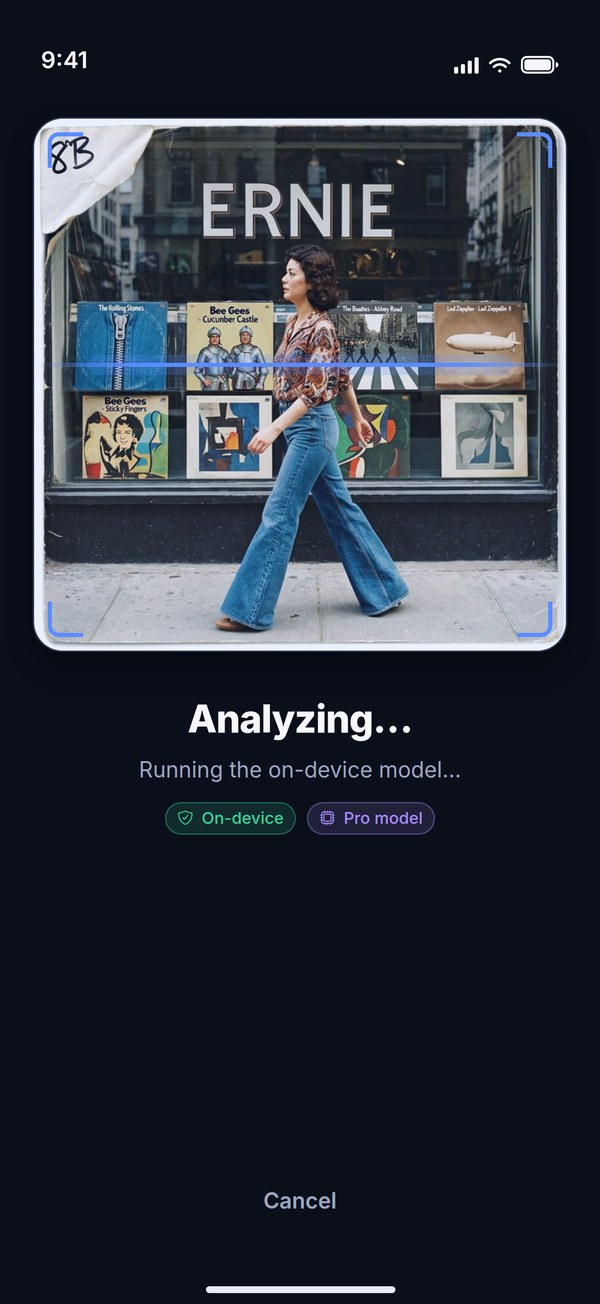
Analyzing
A second or two, entirely on the phone. Cancel any time.
The verdict
Colour-coded card, confidence score, and the meter from Likely real to AI generated.
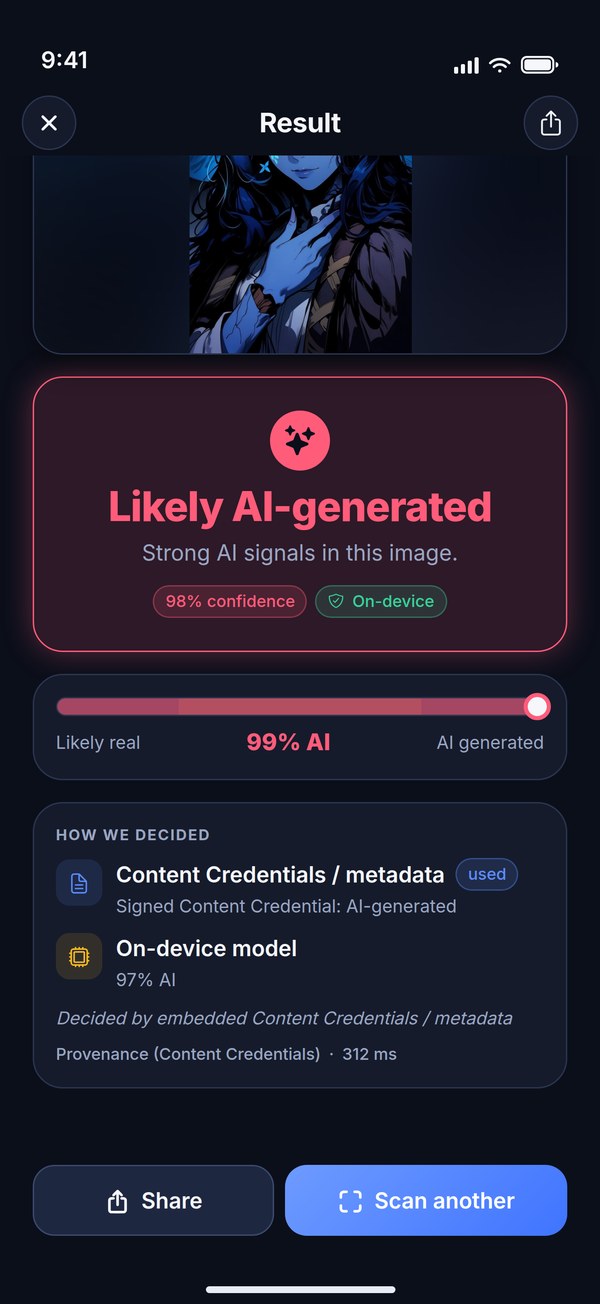
How we decided
Each signal, which one was used, and a plain-language note on what the verdict can't promise.
History
Every past verdict, on your phone only. Long-press to delete, or clear it all.
A signal, not proof.
AI-image detection is probabilistic. So Expose AI tells you how confident it is, says Uncertain instead of guessing when the signal is weak, and shows which pass decided — and asks you to use it as one tool among several, never as the final word about a picture or a person.
- Heavy compressionRe-saved, re-posted, messaging-app copies lose the fine texture the model reads.
- Screenshots of screenshotsApp UI around the picture confuses things — that's what Crop is for.
- Brand-new generatorsA model learns from what exists. A generator released yesterday may slip through.
- Stripped or spoofed metadataContent Credentials can be removed or faked, so the metadata pass is never the only pass.
Free to use. Pro sharpens the call.
Free
$0Unlimited on-device checks, supported by a small banner ad.
- Every verdict, every meter, every signal
- Share sheet and Crop included
- 100% on your device
Pro
$4.99 / month · $29.99 / yearOur most accurate on-device model, and every ad removed. A simple subscription, cancel anytime.
- Roughly half as many Uncertain verdicts
- Batch check: up to 12 images at once
- No banner, no interruptions
- Still instant, still on-device — nothing uploaded
Prices shown in your local currency in the app before you confirm. Restore purchases any time.
The short answers.
Are my photos uploaded anywhere?
Never. Detection runs 100% on your device using a model that ships inside the app. Your images are not sent to any server, and the app works fully offline.
How accurate is it?
AI-image detection is probabilistic — treat results as a strong signal, not proof. Every verdict comes with a confidence score, and the app says Uncertain rather than guessing when the signal is weak. Heavily edited, compressed or screenshotted images are harder to judge, and brand-new generators can slip through.
How does detection work?
Two passes run side by side: a fast metadata check for embedded Content Credentials (C2PA), XMP and AI-generator tags, and a neural network trained to spot the visual fingerprints of AI image generators. A credible AI claim in the metadata decides on its own; otherwise the model does, and the result screen shows which one made the call.
What images can I check?
Anything on your phone: photos, saved images and screenshots. Pick from your library, or share an image to Expose AI from any app. Use Crop to isolate the picture inside a screenshot.
Is it free?
Yes — unlimited on-device checks, supported by ads. Pro ($4.99 a month or $29.99 a year) switches to our most accurate on-device model and removes all ads. Both tiers run entirely on your device.
What does Pro add?
Pro swaps in a larger on-device model — a SigLIP2-based image tower with a head trained on the app's exact preprocessing. On the same evaluation set it returns roughly half as many Uncertain verdicts as the standard model. Pro also adds batch check (up to 12 images at once) and removes every ad. Nothing changes about privacy: both models run on your phone.
What if the verdict is Uncertain?
Uncertain means the standard model did not find enough signal to call it. On that screen you can run the Pro model on the same image — subscribe and it re-analyzes automatically — or, where available, watch a short ad to try the Pro model once on that image.
Where is my scan history stored?
Only on your phone. History keeps a small thumbnail and the verdict for each scan in the app's private storage — never uploaded, never synced. You can pause it or clear it any time in Settings, and uninstalling removes it.
Does it catch face-swaps and AI edits?
Expose AI targets AI-generated and AI-edited images, including face-swapped and fully synthetic photos. It analyzes single images — video analysis isn't supported yet.
Do I need an account?
No sign-up, no login, no account. The app doesn't even ask for photo-library permission: the system picker hands it only the one image you tap.
Does it work offline?
Yes. The model is bundled in the app, so scans work in airplane mode. The only things that need a connection are ads and the Pro purchase.
Real or AI?
Know in seconds.
Free. No account. Nothing leaves your phone.